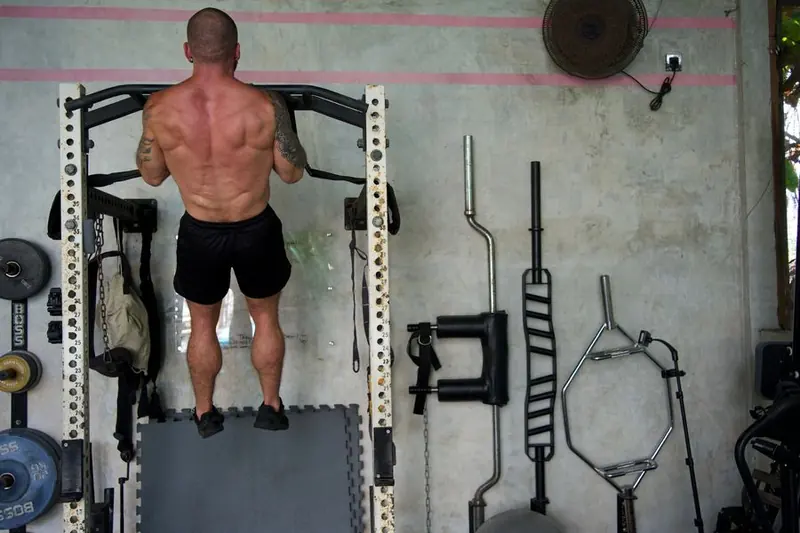
Whole body training isn't a new trend. It's the original way people trained — and for decades, it built some of the strongest, most complete physiques the sport has ever seen.
Then it fell out of favor. Now it's back. Here's the actual history, plus an honest look at where it wins, where it doesn't, and how to build your own setup.
A Short History of Whole Body Training
Before the 1960s, training the whole body in one session wasn't a "style" — it was just how everyone trained. Early strength icons like Eugen Sandow, John Grimek, and Steve Reeves built their physiques on full-body routines, hitting every major muscle group two to four times a week.
That started to change in the late 1960s and into the 1970s. Bodybuilding magazines — Joe Weider's in particular — began pushing "split" routines, where you train one or two body parts per session instead of the whole body at once. By the 1980s and 90s, the split routine (often called the "bro split") was the default template handed to anyone who walked into a gym.
Whole body training didn't disappear. It got relabeled as a "beginner" program — something you graduate out of once you've been training a year or two. That idea stuck around for decades, even though the people who originally built incredible physiques never trained that way.
More recently, that framing has been getting challenged. Research comparing split and whole body training — with total volume held equal — consistently shows similar results for both strength and muscle growth. The "beginner program" label was never really backed by evidence. It was backed by magazines selling a system.
The Case For Whole Body Training
It's time-efficient. Two to four sessions a week covers everything. No need to be in the gym five or six days to make progress.
It's harder to skip. Miss a whole body session and you've missed work on your whole body. Miss a "leg day" in a split and legs might not get trained again for a week.
It keeps the big patterns fresh. Squatting, hinging, pushing, and pulling every session (or close to it) builds skill and coordination in those lifts fast — the more often you practice a movement, the more confident and efficient you get at it.
It doubles as conditioning. Moving between exercises with minimal rest keeps your heart rate elevated for the whole session. You're not just building strength — you're getting a real conditioning effect without needing to bolt on extra cardio.
Recovery windows are naturally built in. With sessions spaced out across the week, no single muscle group is getting hammered two days in a row by accident.
Where Whole Body Training Falls Short
Exercise selection matters more than most people realize. Because you're hitting several big lifts back to back, every exercise in the lineup needs to be one your joints actually tolerate well. A lift that beats up your shoulders or takes 20 minutes to warm into isn't a good fit here — pick lifts you can execute cleanly under fatigue, not ones that fight you.
It can get stale — and that's a real risk, not just boredom. Running the same lifts at high frequency works fast, but it also means you adapt to it fast. Past a certain point, the same exercises start producing diminishing returns and raise the odds of overuse aches. Running a lineup for 4-8 weeks, then rotating in fresh exercises, keeps the benefits coming without the wear.
Session length can creep up. Covering everything in one sitting takes longer per session than a split, where you're only working a couple of areas.
It asks more of your nervous system, not just your muscles. Juggling several big lifts back to back is more demanding upstream than it looks — especially early on, or during a genuinely stressful stretch of life. Easing in and giving yourself an adjustment period matters more here than with a split.
None of this makes one approach objectively better. It makes them different tools — and for most people over 40 who want to get stronger without living in the gym six days a week, whole body training is usually the more practical one, provided the exercises are chosen with your joints in mind.
How to Build Your Own Setup
Two things decide what your whole body training looks like week to week: how many days you train, and how many exercises you stack into each session. Get the pairing right and the plan holds up. Get it wrong and you either can't recover or you're not doing enough to progress.
Rule of thumb on exercise count: stay between 3 and 5 exercises per session. Fewer than 3 and it's not really a whole-body circuit anymore. More than 5 and you're juggling too many movements to keep quality high and recovery manageable.
Rule of thumb on frequency: whole body training needs at least 3 days a week to actually work. Twice a week isn't enough volume across the week to build real progress — if that's all the time you have, a different approach fits better than trying to force this one into two sessions.
Here's how exercise count and frequency pair up in practice:
3 days a week, 4-5 exercises per session Same session, repeated each of the 3 days. Covers squat, hinge, push, and pull every time you train, so frequency stays high on all four patterns.
- Squat
- Hinge (or hinge as accessory)
- Push
- Pull
- Carry or core (if using 5)
4 days a week, 3 exercises per session (A/B split) Two different sessions (A and B) alternating across the week, so each pattern still gets hit twice.
Session A: Squat, Push, Pull Session B: Hinge, Push (different angle), Pull (different angle)
4-5 days a week, 2-3 exercises per session Smaller sessions, spread further across the week. Good when you want to keep each individual session short, since you're coming back again in a day or two anyway.
Session A: Squat, Push Session B: Hinge, Pull Session C: repeat A or B, or mix carry/core in
The trade-off: fewer sessions per week means bigger circuits to cover everything each time. More sessions per week means smaller circuits, since the week itself covers the ground instead of any single day.
Keeping it balanced: whatever combo you choose, try to hit all four patterns — squat, hinge, push, pull — across the week, not just within a single session. A push-pull-leg balance across your sessions keeps one area from getting neglected while another gets overworked.
For loading, sets, and rep progression within these sessions, see Whole Body Strength Circuits.
FAQs
Is whole body training only for beginners? No. That idea came from 1980s bodybuilding marketing, not from evidence. Advanced lifters and even competitive strength athletes still use whole body approaches.
How many days a week should I train whole body? Most programs land on three to four sessions a week. Fewer than that and you won't build enough frequency to get the real benefits.
Will I build as much muscle as I would with a split? Research comparing the two, with total training volume equal, shows similar results for strength and muscle growth. The bigger factor is usually consistency — the program you'll actually stick with wins.
Do I need special equipment for whole body training? No. A handful of compound lifts — squat, hinge, push, pull — covers the essentials.
How long should I run the same exercises before switching them up? Somewhere around 4 to 8 weeks. Past that, the same lifts start giving diminishing returns and raise the odds of overuse issues — rotating in fresh exercises keeps progress coming.
The Bottom Line
Whole body training isn't a shortcut and it isn't a beginner phase to grow out of. It's the format that built some of the strongest physiques in history, sidelined for a few decades by magazine marketing, now back because the evidence never actually supported ditching it. Pick your days, pick your exercise count, respect your joints in exercise selection, and rotate the lineup every 4-8 weeks. For the specifics on sets, reps, and rest within a session, see Whole Body Strength Circuits.